When you start looking into straps you will hear about Nato straps and Zulu straps.
However, it can be a little complicated to understand what the difference is.
They are both nylon straps and they both look very similar. This seems to be why there is so much confusion. Some people even believe they are the same thing and the name is just interchangeable.
Do I know the difference? I don’t know. I think so. Well, I’m going to tell you everything I know and let you decide what you want to think.
Confusion Between A NATO And A Zulu Watch Strap?
If you look at many watch shops today the term Nato and Zulu are used pretty much interchangeably, in fact a lot of listings use both words to describe the strap
The Listing will read something like – “NATO Zulu Watch Strap” or similar. So it is no wonder people do not realise they are two separate things.
You will also see videos of people talking about a single pass or double pass Nato and then call it a Zulu, but then showing a double pass Nato, or maybe it is a Zulu? … So who knows what is going on?
Is there even a difference? It can really seem like there isn’t. Maybe you can take any nylon strap and call it whatever you want?
(You can read more about – What Are The Advantages Of Using A NATO Strap?)
Common Theories That Explain The Difference Between A NATO And A Zulu Watch Strap?
Here are a few different theories that explain what the differences between Natos and Zulu straps
Trademarks
You will often here the story that the Nato strap was invented and trademarked so to get around this a rival company produced a slightly different strap and called it a Zulu.
It was made with a thicker weave of nylon and had slightly different buckles, which were more rounded. This was enough to get around the trademark issue.
Single Pass and Double Pass Watch Straps
You will also hear the argument that the difference between the two straps is the addition of an extra piece of material.
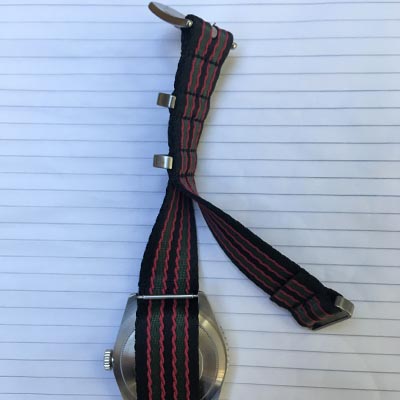
A Nato will have this extra piece of material that means you can pass the strap under the watch twice. This is where the term “double pass” comes from.
A Zulu is said to be only one piece of material and is where the phrase “single pass” comes from.
3 or 5 Buckles
You may have also heard the term a “3 or 5 buckle Zulu”
This is exactly the same as the single or double pass straps.
If a strap is one piece, it will have 3 buckles. If it has the extra length of material, allowing for a double pass, then it will have 5 buckles.
This common phrase makes me wonder if you can have both single and double pass Natos and a single and double pass Zulu? If this is the case, then what is actually the difference? They are just the same thing with a different name?
The History of Nato Watch Straps
The story goes that the Nato strap was introduced by the British Army in the 1973. No on really contests this.
The name came from all military stock having a “Nato Stock Number” (NSN) and for whatever reason the strap took on the nickname “Nato strap” name and its stuck ever since.
These straps where double pass and is often why people argue that natos need to be double pass, anything else…meaning a single pass… is a Zulu.
Interestingly if go to the Official Nato website the picture they show shows a double pass nylon strap, but the buckles are rounded. The common belief is that these rounded buckles are only found on Zulus, So, this is a double pass Zulu?
The James Bond Nato Strap
If you are a fan of James Bond, you will know he wore a Rolex submariner on a Nato in Goldfinger.
But I just said that the British Army didn’t issue Natos until 1973… Goldfinger came out 9 years earlier in 1964, so the Bond Nato isn’t a Nato?
So what is it?
It’s certainly a nylon strap and looks to be a single loop. So it’s a Zulu? Or is it a single pass Nato? But the official issue Natos where double pass, so it can’t be a Nato?
You can very easily see how trying to label these straps is a nightmare. No one really seems to know the difference!!
Lack Of Holes On A Nato Strap
Interesting if we go back to that picture on the Nato website, if you look carefully, you will see that the strap doesn’t have any holes for the buckle.
I can’t confirm this, but I believe the holes would not have been present in early Natos. You would use the two buckles at the end of the strap to loop the strap around and make it tight.
I have actually owned a belt that that used this system. I was very wary at first but it was one of the best belts I have every owned. It could be tightened to exactly the size I needed and never came loose. This also makes sense as a watch strap as it allows you to adjust the strap as required and could even allow you to easy wear it over clothes and still get the perfect fit while always being tight.
Today’s NATO and a Zulu Straps
When you look at today’s straps, I just think they are a combination of everything that was once available.
I think they are all inspired by each other and now you have many hybrids. I have many straps, they are all different colours as well as being different thicknesses with slightly different weave types and they are even made from different materials. Some are softer and some are even elasticised.
The buckles even vary across them and you can get all these differences in both one piece and two pieces variations.

You can even now get a nylon strap that comes in two pieces, so it is like a traditional leather strap but made form nylon.
All the straps I own have holes for the buckle, but I am on the lookout for a strap without holes and only uses the buckle loops for fastening. If you know where I can get one of these, let me know!
What Should We Call These Type Of Straps?
I think at some point in history you could call a strap a Zulu or a Nato, now I’m not too sure. They all seem so merged into one another it’s hard to tell what is what.
I think we should just call them nylon straps. Then say if it’s a single pass or double pass to explain what we have.
I think that is easiest way to get around it… or we can just keep interchanging the two names. After a while you stop caring, so really, call it whatever you are most happy with.
(You can read more about – Frequently Asked Questions About – Nato Straps)
Is There Any Benefit To Either Type Of Watch Strap?
Whether you call it a Nato or a Zulu, the two types of strap, the single and double pass, have minimal difference on the watch.
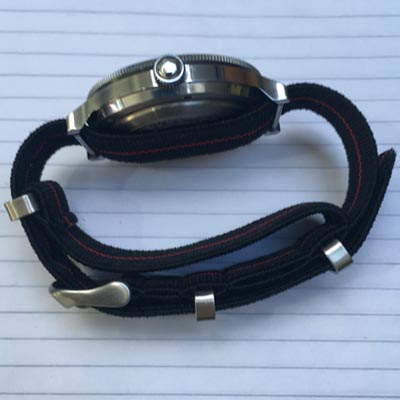
The single pass and double pass both do the same thing. They both provide a single piece of material going through the lugs and under the watch.
If one of your spring bars breaks, the watch will still be attached to the strap. This is the main benefit of any nylon strap, compared to a traditional 2 piece strap.

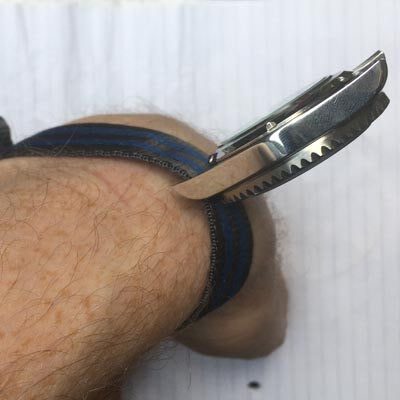
The extra material on a double pass serves no extra protection and many people actually cut it off to make it a single pass.
Personally I bend it back on itself, rather than looping it under the watch. I feel a double strap makes it too thick under the watch and I don’t like how it sits.
I would cut the extra bit off, but I’m half lazy, half worried I might all of a sudden like the idea of a double pass.
(You can read more about – How Often Should You Change A Watch Strap?)
Conclusion
Are you any less confused about the difference between a Zulu and Nato? I know I am none the wiser.
I am just going to call them a single or double pass strap, and then at least you have a vague idea of what I’m talking about.
At the end of the day it doesn’t really matter. So long as you enjoy the strap and know how to put it on your wrist, you can call it whatever you want.
If you have either style of strap and they are a little stiff. You can read – How To break In A Nato Strap to help soften it up

Ian is the main writer at Horology Dream and is a lover all things watch related.
He has been a watch collector for over a decade and brings his knowledge and experience to this site to help you on your own watch collecting journey.
You can connect with him on Social media and talk anything watches or read more about him on his Author Page.